
Retail marketing trends and takeaways:
The headlines of 2020 and 2021 were grim: bankruptcies, darkened flagships, entire chains disappearing. In early 2024, Forbes, citing Coresight Research, projected that U.S. store closings could nearly double year over year in 2025 at roughly 15,000 stores total.
So far? This tracks. Coresight’s official reporting of closures told us that at the midyear point, we were looking at nearly 5,822 closures. Not quite the worst-case prediction, but already nearly 80% of 2024’s estimated total (7,325).
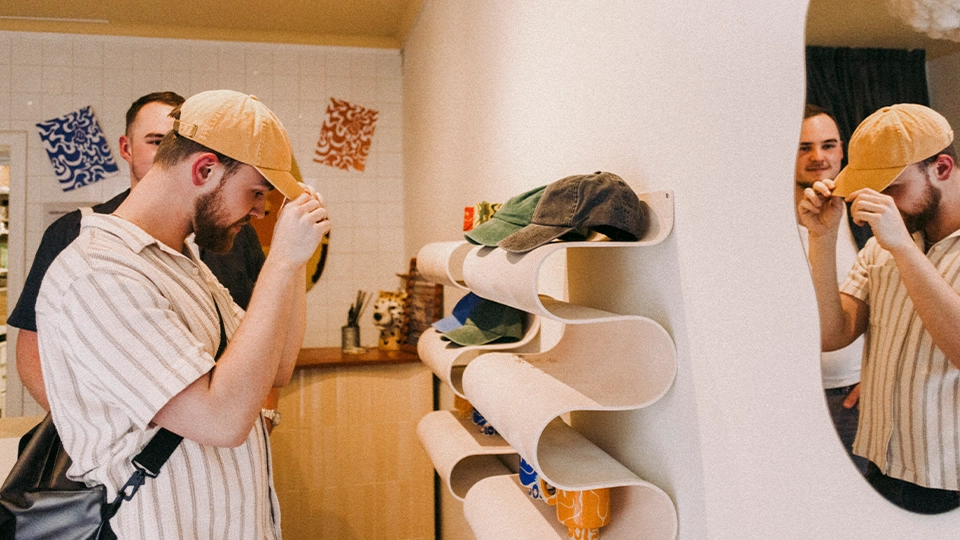
And yet, even amid the closings, consumers are signaling something different. According to The Harris Poll’s Return of Touch Report, presented by Quad, 71% of consumers say that experiencing a brand in a physical store deepens their loyalty, and nearly 80% say online shopping lacks the “magic” of an in-person find.
And brands are responding. Pop-ups, for example, are proliferating. CapitalOne Shopping reported that temporary retail spaces will exceed $95 billion in market value this year. Legacy retailers are reimagining flagships, turning to smaller footprints, creating brand showcases that emphasize discovery, tactility and local relevance — proof that the physical store isn’t dying; it’s evolving.
So, despite a backdrop of mass closings, here are five pivots retailers are making to reinvent the in-store experience and, as Burt explains, what it means for retail marketers in 2026.
1. Bed Bath & Beyond takes a franchise approach
When Bed Bath & Beyond shuttered its stores in 2023, many assumed the once-beloved home retailer was gone for good. But in 2025, the brand’s revival took an unexpected and pragmatic turn.
After acquiring Bed Bath & Beyond’s intellectual property, Overstock.com rebranded itself as Bed Bath & Beyond Inc., then set out to merge the brand’s powerful name recognition with the physical footprint of Kirkland’s Home, which Overstock purchased in 2025. The result: Bed Bath & Beyond Home, a new/old hybrid that’s less a reinvention of store format and more a reinvention of brand value.
“I feel like it’s the best of the best from both stores,” says creator Stacey Collins (@WilshireCollections) of the first repurposed store in Tennessee.
But the company isn’t stopping there. In October 2025, Bed Bath & Beyond announced a national franchise program that will allow local entrepreneurs to own and operate neighborhood-scale Bed Bath & Beyond stores to include home, kitchen, storage and organization departments. 80% of inventory will come from corporate headquarters, and 20% will be locally curated from regional stores and designers. According to Executive Chairman Marcus Lemonis, the goal is to “grow Bed Bath & Beyond in the most capital-efficient manner,” pairing local ownership with national infrastructure.
2. 7-Eleven scales the convenience format
International convenience store chain 7-Eleven is pursuing one of the most ambitious growth strategies in its category, planning to open 1,300 new large-format, “food-forward” stores across the U.S. by 2030.
These stores are bigger, feature expanded fresh-food menus and digital upgrades for frictionless checkout and are outperforming legacy units: 13% higher same-store sales in the first year, with sales projected to grow 30% by maturity, Joe DePinto, 7-Eleven CEO, said on a 2024 investor call.
3. Whole Foods is rightsizing the retail experience
Rightsizing isn’t new — Target has been refining small-format urban stores for nearly a decade, but a new wave of retailers is doubling down as consumer demand shifts toward convenience and curated assortments.
In 2024, Whole Foods debuted its Daily Shop concept in New York City’s Lenox Hill neighborhood (about one-fifth the size of a typical store), designed for quick urban trips with more than 400 local products, a Juice & Java café and an expansive grab-and-go selection. Since then, the retailer has opened three more stores with the pared-down retail format, with another coming to Brooklyn’s Williamsburg neighborhood in December 2025.
4. Trader Joe’s embraces “fast casual”
Other grocers are making this move too: Trader Joe’s is piloting its Pronto concept — a leaner, high-efficiency format for grab-and-go food in New York’s Union Square. This smaller format allows city dwellers to quickly shop for the store’s economically priced ready-made food, like $5 salads, without the snaking lines found in the larger-format stores.
The strategy reflects a broader acceleration: Instead of chasing scale, brands are learning that smaller, more flexible stores can grow share while keeping costs lean.
5. Barnes & Noble’s retail experience goes local
Starting in 2019 and still evolving, Barnes & Noble has revived itself by empowering local managers to curate assortments, displays and events, ensuring each store reflects its surrounding community.
The result is a bookstore that feels personal — less corporate and more cultural. Some locations host author readings and poetry nights; others lean into regional histories or local creators.
What these shifts mean for marketers
Viewed together, these examples highlight a clear trend: Retailers are moving away from one-size-fits-all models and embracing adaptable, locally attuned formats designed around how consumers now shop and engage in person.
According to Quad’s Burt, these changes signal a new retail experience; one defined by flexibility, personalization and operational discipline.
In this model, the physical store becomes more than a point of sale — it’s a media channel and data source.
How retailers can stay agile
Success, Burt explains, depends on agility — the ability to adapt seasonal and campaign specific messaging, merchandising and creative across markets quickly and consistently.
This, Burt says, demands that brands build rigor around their in-store operations.
Other tools like Local Connect by Quad help brands maintain national presence across formats and franchises by localizing creative, media and messaging for individual markets while maintaining a unified national voice. By creating a central source for verified brand assets, retailers can manage deployment, review performance and boost impact in every local market.
Burt notes that the brands leading this new era of retail are those that unite creativity with precision — turning every in-store moment into an opportunity to learn, connect and drive loyalty.