

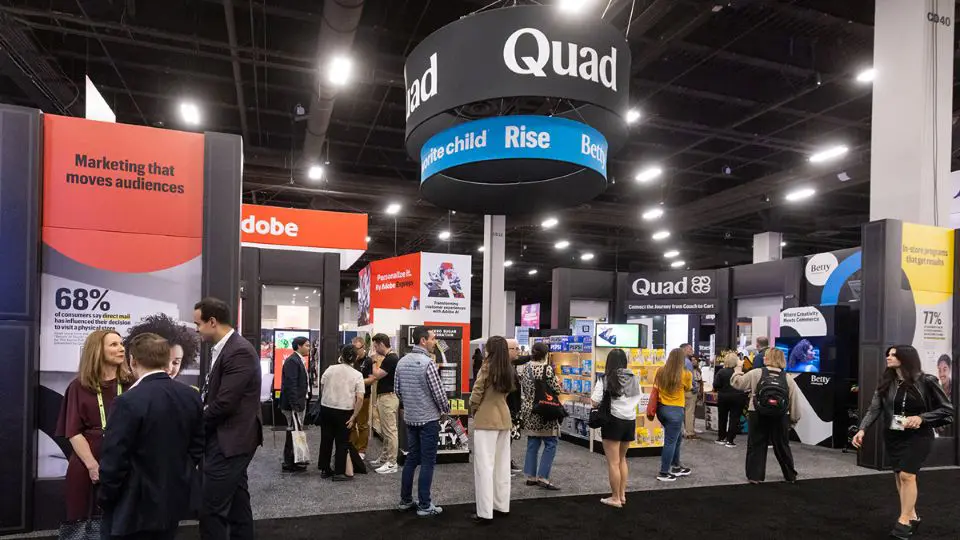
More than 10,000 retail and CPG leaders converged on Las Vegas last week for Shoptalk Spring 2026, and the throughline was impossible to miss: AI is no longer a horizon story. It’s the operating reality and the industry is still figuring out what that means in practice.
Here are the signal-from-the-noise takeaways for marketers trying to stay ahead.
AI in retail has moved from “if” to “how” — but tactical clarity is still lagging
Given the conference theme, Retail in the Age of AI, it’s no surprise that agentic AI dominated the conversations across presentations and panels. One of the more anticipated keynotes came from Bret Taylor, Co-Founder and CEO of Sierra and Chairman of OpenAI, whose session was titled “Sorting Agentic Hype from Reality.”
Retail Dive zeroed in on one of his key soundbites: “I think the more considered the purchase, the more consumers will use personal AI to help them make that decision. Are you buying a new car? Are you refinancing your home? … I think the idea that every single retail experience is to be driven by a personal AI agent — I don’t completely buy.”
In other words, agentic AI solutions are definitely not one-size-fits-all. And if you’re a retailer or CPG, your mileage will vary.
The question to pressure-test internally: What specific outcome is a particular AI application designed to drive? If the answer isn’t crisp, it may not be ready for investment.
Personalization is dominating the AI-in-retail conversation
One of the more interesting takeaways from the Shoptalk floor: The AI discussion wasn’t as centered on automated media buying or programmatic optimization as some expected.
That tracks with what Macy’s put on the main stage. The retailer used Shoptalk to show off “Ask Macy’s,” a Google Gemini–powered shopping bot that’s already showing impressive results. As Bloomberg News put it in a clickworthy headline in the wake of Shoptalk: “Macy’s Says Users of New AI Chatbot Spend About 400% More Online.” (Bloomberg notes that Macy’s “gathered the data during the last several weeks while testing the AI shopping assistant with about half of visitors to its website.”)
The physical retail moment is being underestimated
Amid all the AI buzz, one counternarrative signal from Shoptalk was how much appetite exists for getting back to basics on in-store execution. One brand making that case: New Balance.
In a Thursday talk titled “Built for the Long Run: How New Balance Sets a Global Pace,” New Balance CEO Joe Preston outlined how his brand returned to growth in part by, well, actually showing up in the real world. As Coresight Research explains: “The brand has grown 180% over the last five years by positioning itself as premium, holding the line on discounting and opening 80 stores in 2025 alone.” (Coresight Research is a research partner of Shoptalk Spring.)
“The consumer was changing the way they were experiencing and shopping for brands, and we were just not keeping pace, so our sales and profitability reflected that,” Preston told the audience, as Inside Retail reports. “We wanted to make sure that we were controlling our destiny and doing the things we needed to do to show up for the brand.”
The takeaway: Marketers that can credibly connect digital strategy to in-store conversion — rather than treating them as separate workstreams — have a meaningful opportunity right now.
For more on the power of in-store retail, see Quad’s “Return of Touch” research hub.
AI fluency is critical, but retailers and CPGs may need to recalibrate their focus
Across three days, we counted 14 Shoptalk panels centered on AI themes vs. just eight focused on influencer/social marketing. And even some of those influencer/social panels were rather AI-obsessed, such as Wednesday’s “Your Next Brand Ambassador Will / Will Not Be AI” debate.
Another high-profile keynote speaker, Reddit CEO Steve Huffman, made the case for, yes, human consumers consulting other human consumers.
“[T]hose of you who’ve been on Reddit, you know this is true: There’s kind of like this anticommercial vibe to it that comes from the authenticity,” Huffman said on stage on Tuesday. “But what’s funny in that is, 40% of the conversations on Reddit platform-wide are commercial in nature. Because it turns out that the question behind every question is ‘What should I buy?’ Like, people get a new hobby — ‘What gear should I get?’ ‘What movies should I watch?’ ‘What games should I play?’ ‘What should I wear?’ ‘Where should I go?’”
The practical implications
The companies that left Shoptalk with the most traction weren’t the ones with the most sophisticated AI stories — they were the ones offering concrete help for marketers standing in front of them with real problems.
That’s the bar the industry is setting right now. AI fluency matters, but what’s cutting through is the ability to connect it to outcomes: in-store lift, audience reach, creative performance and conversion. Marketers who can bridge that gap for themselves and for their partners are the ones who will own the next phase of this conversation.